High Resolution & Accurate
Aerial Imagery for Telecom
Imagery and elevation models to support network planning, tower sites, line-of-sight analysis, and infrastructure expansion in urban and rural areas.

Imagery and elevation models to support network planning, tower sites, line-of-sight analysis, and infrastructure expansion in urban and rural areas.
In order to develop a network of communication signals across a dense urban environment—especially with the advancement of 5G networks—telecom companies rely heavily on field operations to determine ideal locations for tower installations. Vexcel’s aerial content provides imagery matched against ground control points, resulting in imagery with a two-pixel standard deviation for remarkable accuracy you can trust when calculating Fresnel zones between cell sites.
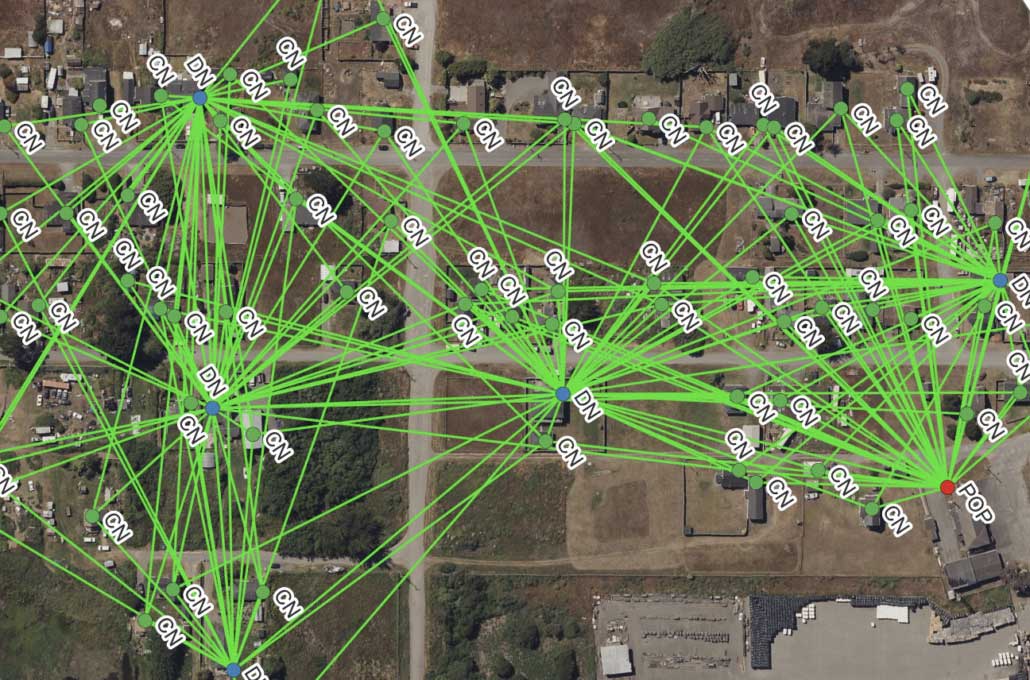
“Picking Vexcel and partnering with them…we knew it was the right solution to help us do all of our network modeling. When you have the right solution to model the network with, it solves 50% of the problem.” – Odion Edehomon, CEO Dalet Access Labs

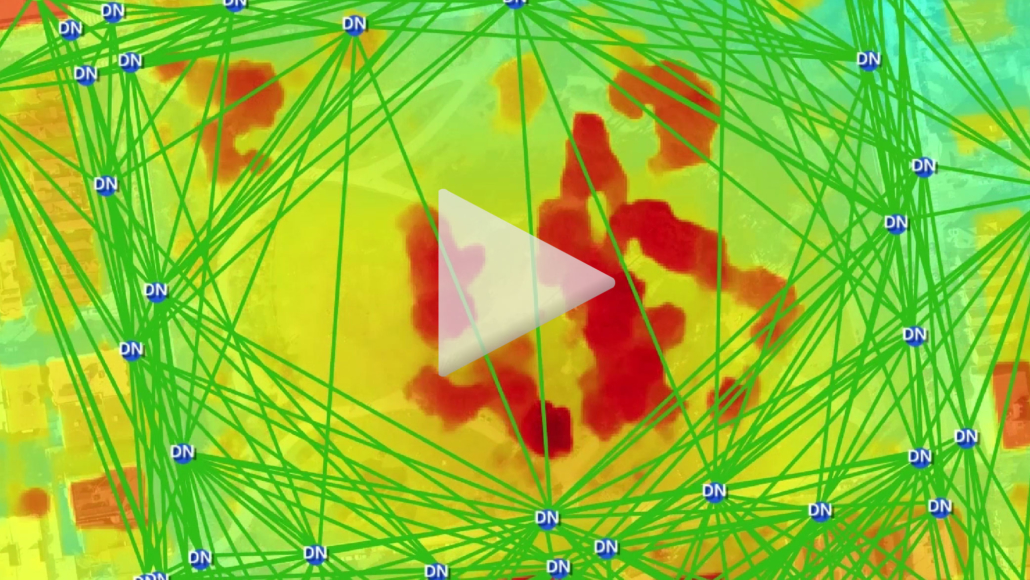
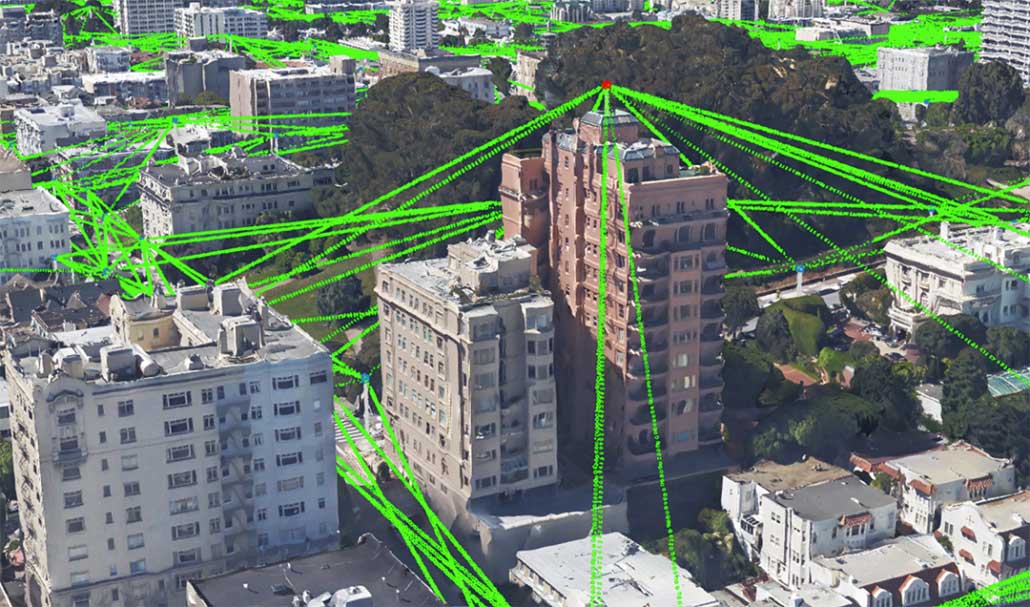
Terragraph, a multi-node wireless Software Defined Network (SDN), is enabling high-speed internet connectivity at 60GHz in many different areas. Network planners need to understand population density, tree coverage and building site to map a large number of nodes. This example from San Francisco uses Vexcel’s TrueOrtho, Elevate, and Multispectral imagery for planning a network.
As 5G continues to be rolled out around the globe, a key factor to its success is the location for small cell base stations. Utility poles and street fixtures are perfect base stations where transmitters can be discreetly placed. Telecom providers can identify and map pole locations–such as streetlights, traffic signals, utility poles–using Vexcel’s high-resolution aerial imagery in densely populated areas and across more rural locations. Oblique imagery allows a planner to view all sides of a building to spot all pole locations. TrueOrtho imagery helps network planners map neighborhoods and city blocks with confidence.
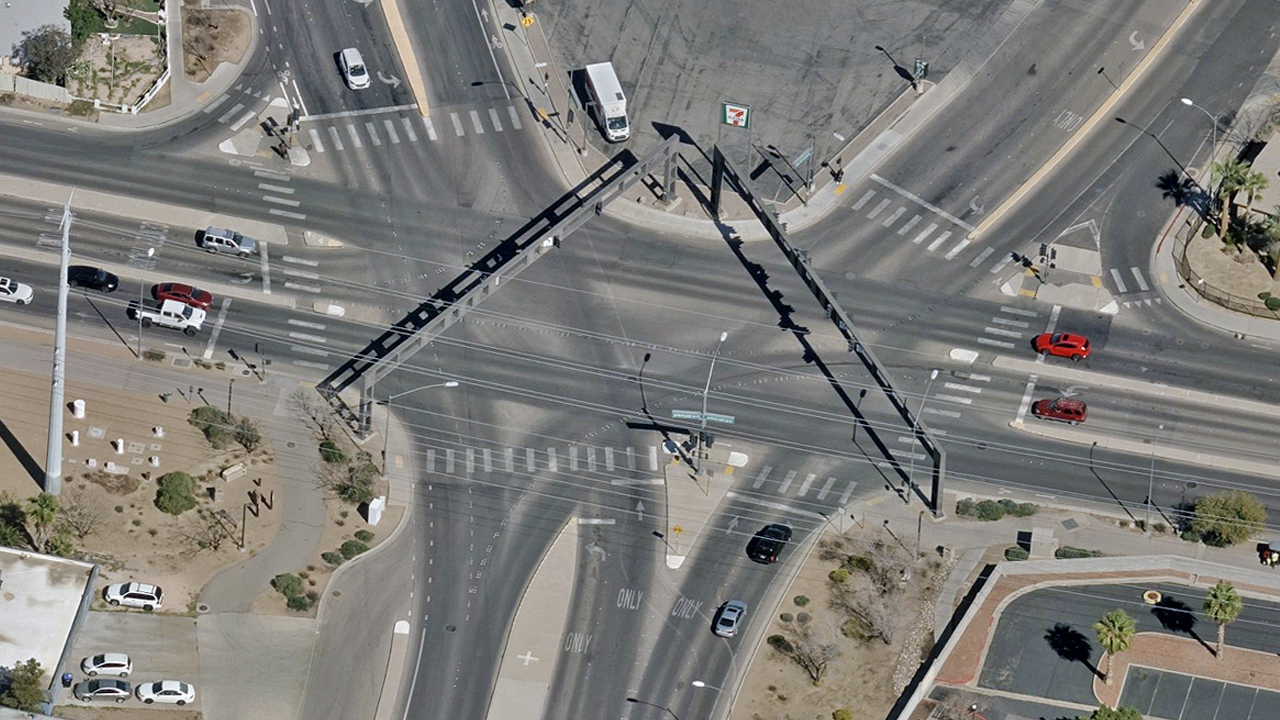
As 5G continues to be rolled out around the globe, a key factor to its success is the location for small cell base stations. Utility poles and street fixtures are perfect base stations where transmitters can be discreetly placed. Telecom providers can identify and map pole locations–such as streetlights, traffic signals, utility poles–using Vexcel’s high-resolution aerial imagery in densely populated areas and across more rural locations. Oblique imagery allows a planner to view all sides of a building to spot all pole locations. True Ortho imagery helps network planners map neighborhoods and city blocks with confidence.
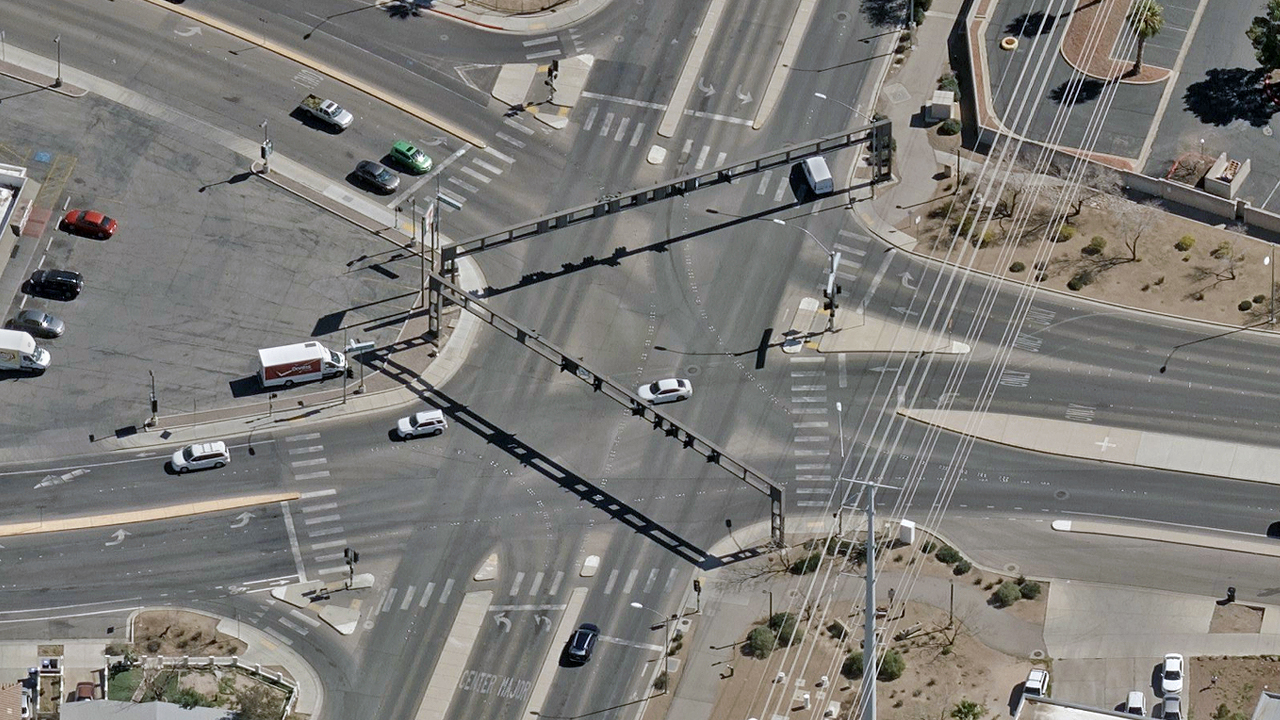
As 5G continues to be rolled out around the globe, a key factor to its success is the location for small cell base stations. Utility poles and street fixtures are perfect base stations where transmitters can be discreetly placed. Telecom providers can identify and map pole locations–such as streetlights, traffic signals, utility poles–using Vexcel’s high-resolution aerial imagery in densely populated areas and across more rural locations. Oblique imagery allows a planner to view all sides of a building to spot all pole locations. True Ortho imagery helps network planners map neighborhoods and city blocks with confidence.
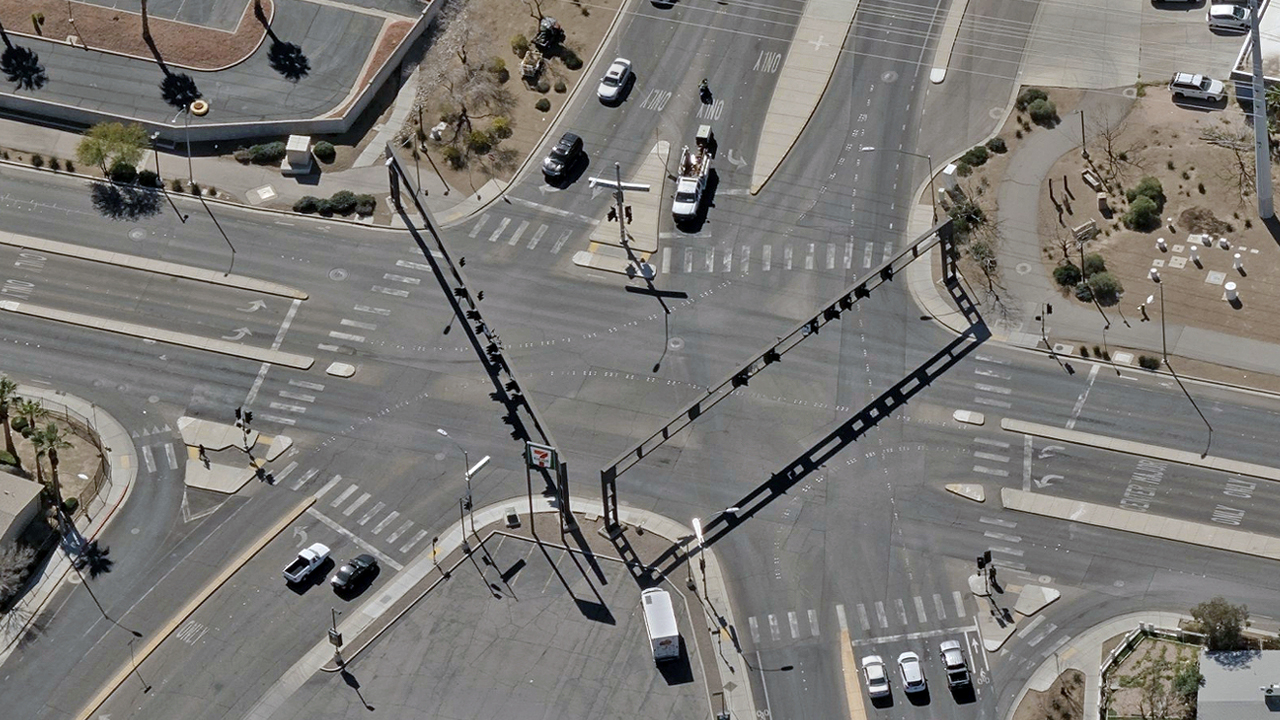
As 5G continues to be rolled out around the globe, a key factor to its success is the location for small cell base stations. Utility poles and street fixtures are perfect base stations where transmitters can be discreetly placed. Telecom providers can identify and map pole locations–such as streetlights, traffic signals, utility poles–using Vexcel’s high-resolution aerial imagery in densely populated areas and across more rural locations. Oblique imagery allows a planner to view all sides of a building to spot all pole locations. True Ortho imagery helps network planners map neighborhoods and city blocks with confidence.
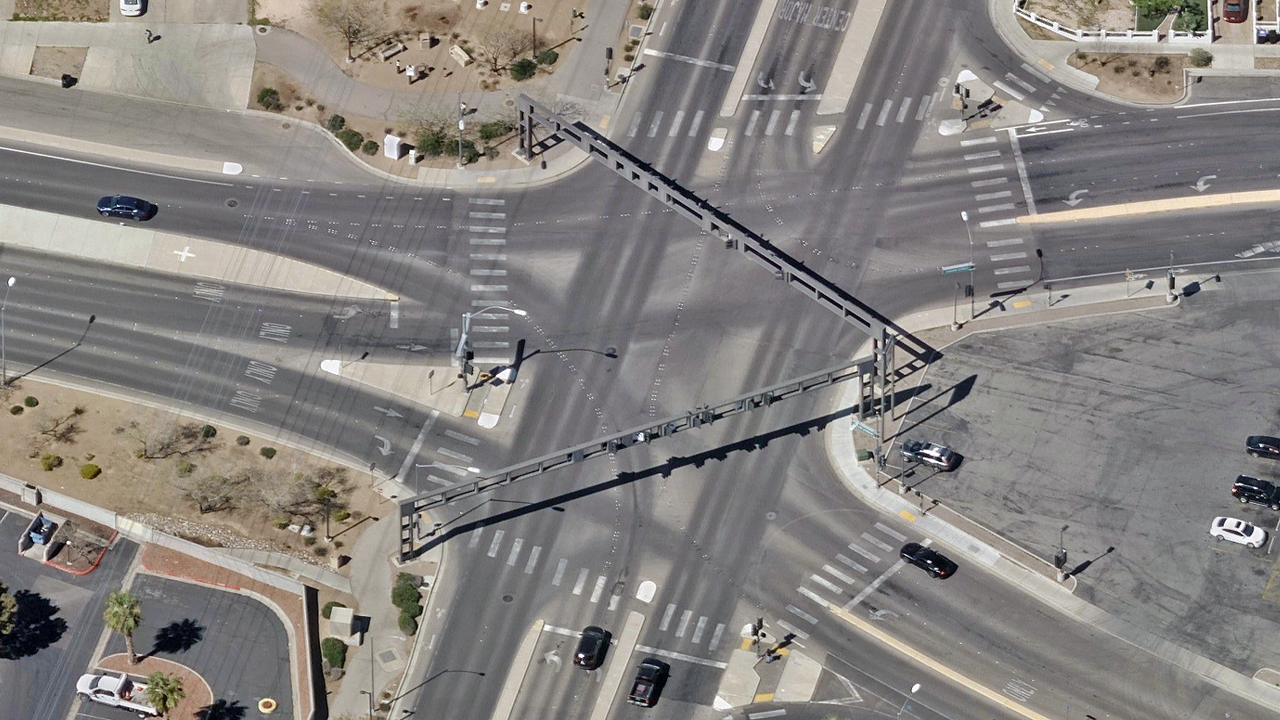
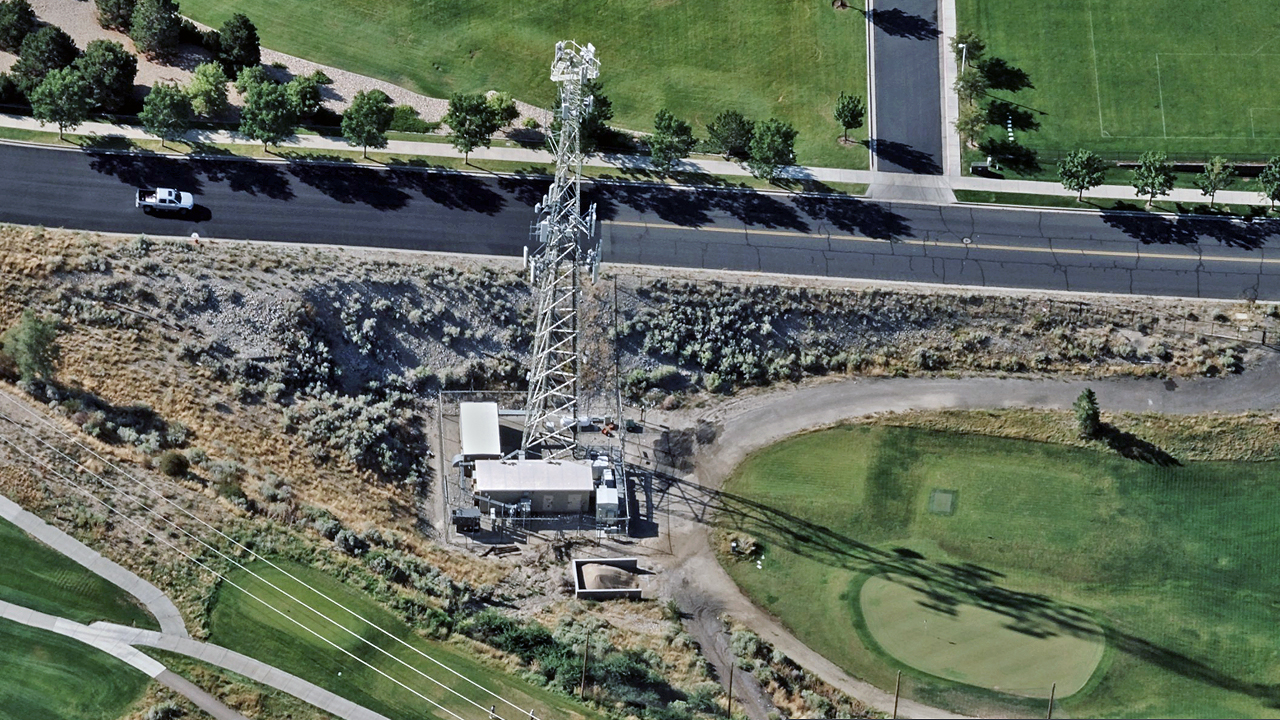
Harness the power of remote inspection with accurate high-res aerial imagery, allowing you to visualize ground conditions before sending a crew out into the field, ideal for wired or wireless telecom operators. While imagery does not eliminate the need for site visits, it greatly improves the efficiency of field ops as they can determine where best to spend their time when on-site.
Vexcel’s highly accurate aerial imagery and geospatial data are the perfect companion for powerful third-party platforms, such as Esri SURE shown here. Bringing Vexcel data inside SURE for ArcGIS helped create an immersive 3D mesh visualization used for validating line-of-sight for a network. Integrating consistently accurate aerial data from Vexcel into their preferred GIS systems allows telecom companies to expand the power of location data, increase geospatial awareness, and help build the next generation of networks.
Vexcel provides high-resolution imagery and elevation models in 30+ countries, including urban and rural coverage in the contiguous United States.
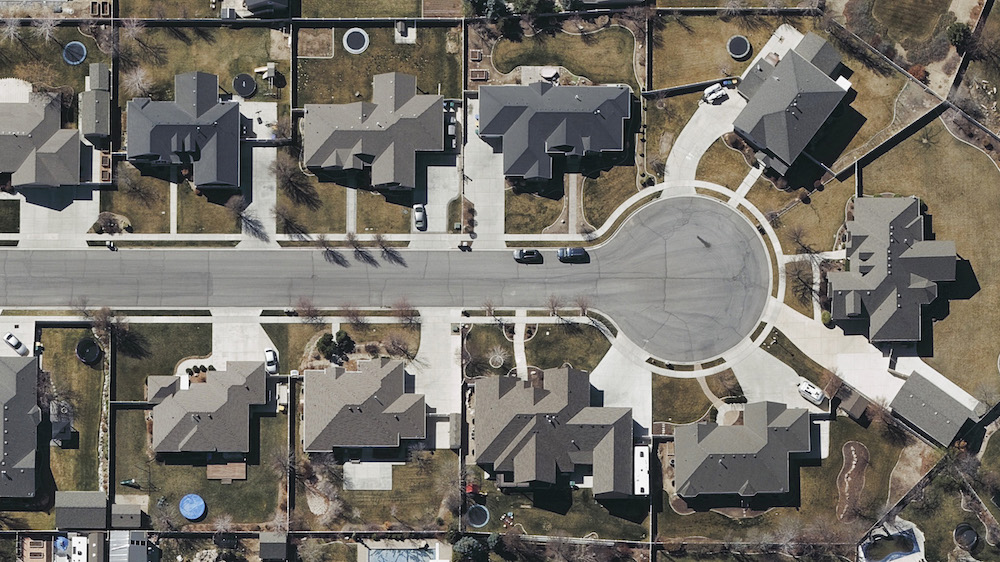
See urban environments from a top-down view in high resolution with no seamlines or parallax (building lean) to determine ideal locations for nodes.
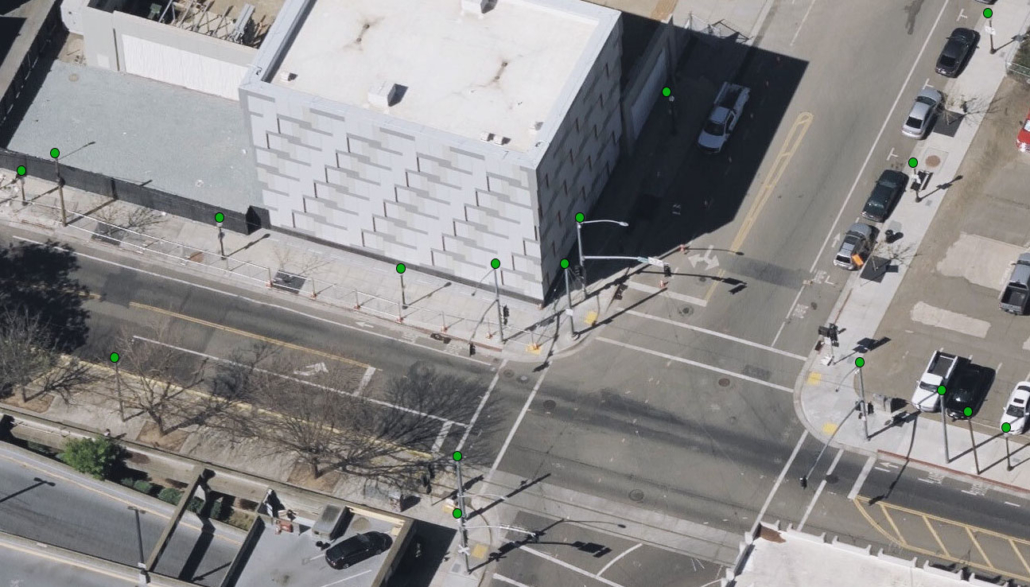
Take in all views around a building or area with Oblique imagery. This birds-eye view at a 45-degree perspective allows end users to virtually tour a property.
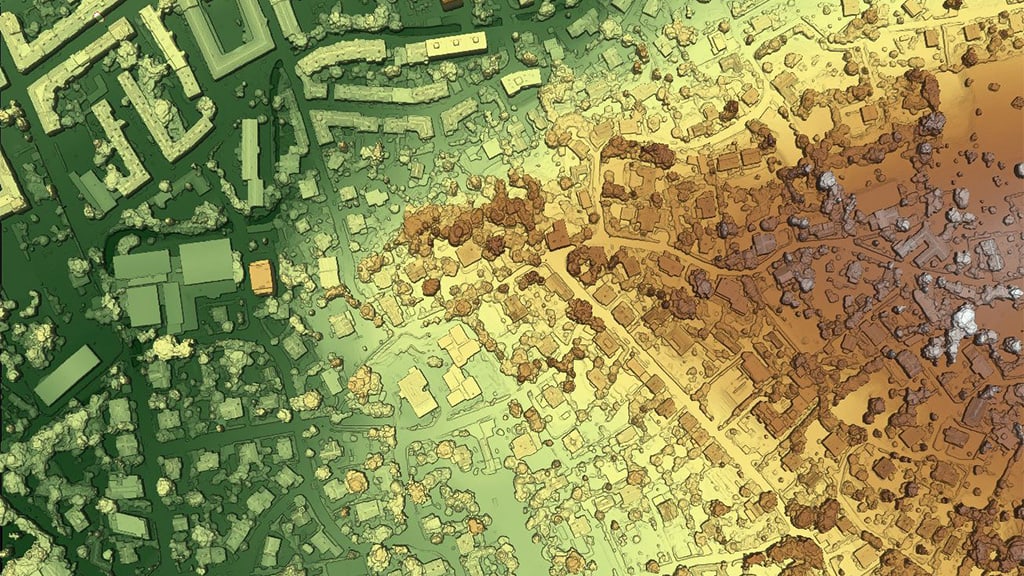
Understand how natural and man-made objects impact your telecom projects with digital terrain and surface models (DTM/DSM).
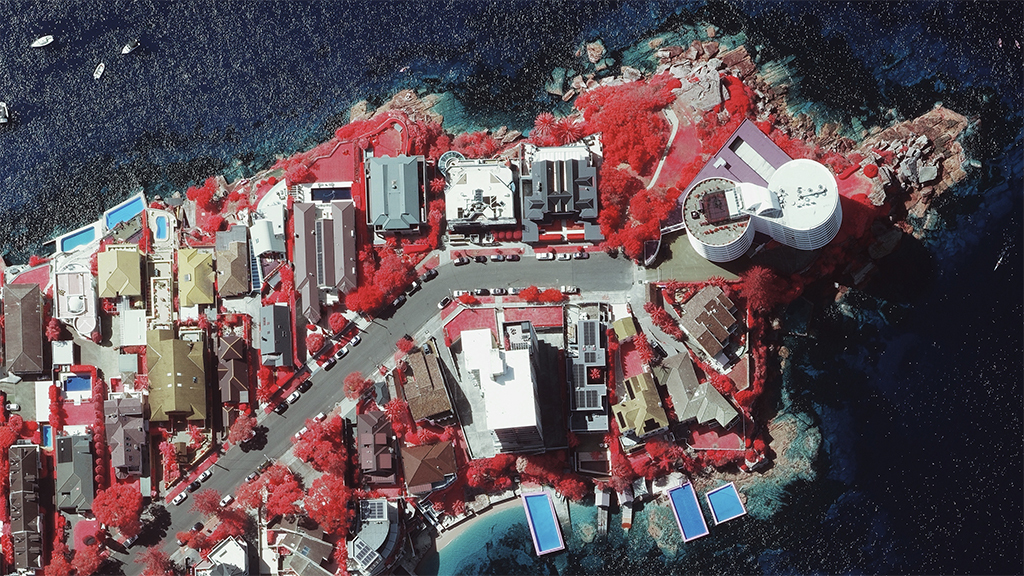
Understand how trees and impervious surfaces impact your telecom projects with color-infrared imagery.
Q: How does aerial imagery support telecom network planning?
Vexcel aerial imagery helps telecom providers plan and expand wireless networks with a detailed view of towers, terrain, buildings, vegetation, access routes, and surrounding infrastructure. Telecom teams use Vexcel imagery to support site selection, infrastructure review, and network expansion workflows. Vexcel also provides aerial imagery coverage in 45+ countries and territories, supporting telecom planning across cities, rural areas, and even country-wide network programs.
Q: How is Vexcel’s DSM data used for 5G tower site selection?
Vexcel DSM data helps telecom providers evaluate elevation, building heights, terrain, and surrounding obstructions when selecting 5G tower locations. Because Vexcel DSMs include above-ground features such as buildings and vegetation, telecom teams can better understand how signals may interact with real-world environments.
Q: What is line-of-sight analysis and how does aerial data support it?
Line-of-sight analysis helps telecom teams determine whether wireless signals can travel clearly between towers, antennas, and devices without major obstructions. Vexcel imagery and DSM data provide detailed views of terrain and structures to support more accurate signal analysis and network planning.
Q: What resolution imagery is available for telecom planning?
Vexcel provides high-resolution aerial imagery at 7.5cm and 15cm resolutions depending on the collection program and geography. Vexcel imagery provides time-stamped, highly detailed, highly accurate views commonly used for telecom planning, tower review, and infrastructure mapping.
Q: What is a Fresnel zone and how does aerial imagery help?
A Fresnel zone is the three-dimensional space around a wireless signal path between two antennas or towers. Objects such as buildings, terrain, and vegetation inside the Fresnel zone can weaken or disrupt signal performance. Vexcel aerial imagery and DSM data help telecom teams identify potential obstructions, evaluate terrain and structure heights, and better plan tower placement and wireless network performance. Vexcel Obliques also provide angled views of towers, buildings, and surrounding infrastructure to better understand real-world conditions around wireless sites.


Large-format UltraCam cameras & sensors.
vexcel-imaging.com

Aerial surveys by fixed-wing aircraft.
kasurveys.com

Aerial imagery and data for government and business.
vexceldata.com