
Color That Counts: Why Calibration Matters
How Vexcel uses calibration to deliver consistent, high-quality aerial imagery at scale for analysis, accuracy, and AI.

When looking at an aerial image, it can feel simple. The grass is green. The roofs are red or brown or orange. The water is blue. The pavement is black.
But color is not nearly as objective as it seems. In fact, color starts as a biological interpretation.
It Begins With How Humans See
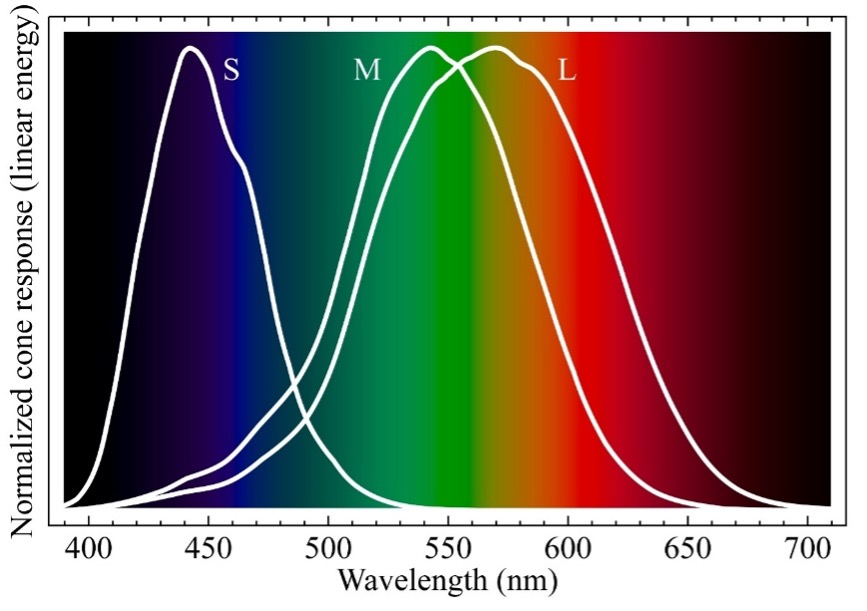
The human eye detects color using three types of cone photoreceptors. These are known as S, M, and L cones, and each is sensitive to different parts of the visible spectrum. Together, they translate wavelengths of light into the colors we experience every day (see image below for a normalized cone response).
However, the exact mix of those cones varies from person to person. It can vary because of the different amount of L, S, or M cones someone may have. And it’s these subtle differences that impact how colors are perceived, especially along the red-green and blue ranges.
In other words: what someone sees as blue in Norway is not necessarily the exact same blue someone will see in California. My blue is not your blue.
Despite these differences, our brains create a consistent interpretation of the world. Cameras, likewise, must do the same. But unlike humans, they can’t rely on perception. They rely on calibration.
Cameras See Color Through Calibration, Not Interpretation
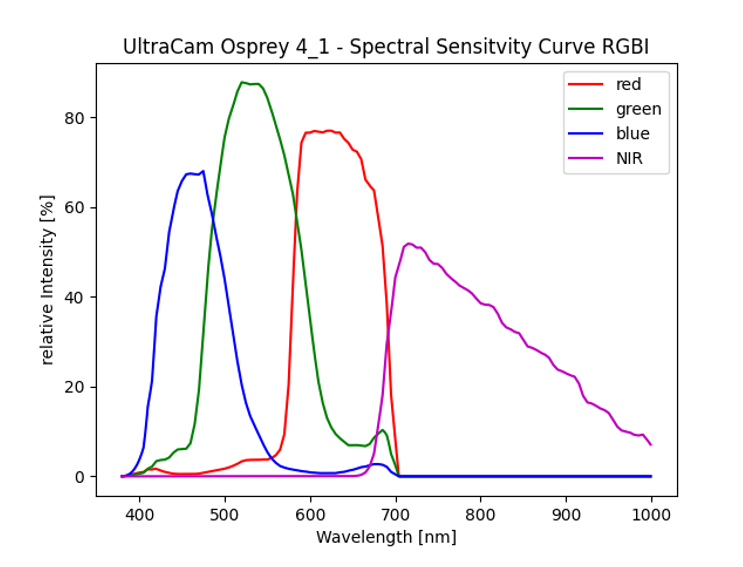
Aerial imagery cameras measure light using sensors and color filters specifically designed to capture the right spectral ranges. The quality and stability of that capture depend entirely on radiometric calibration. The image below showcases how the spectral sensitivity of the color filters and the sensor itself define how light is captured. To ensure stable radiometric behavior, high-quality radiometric calibration is essential.
At Vexcel, calibration starts at the hardware level. We calibrate lens vignetting, sensor vignetting, sensor dark current, apertures, and shutters. We use ISO 17321-1 based methods to calibrate white balance and ensure accurate color response across Bayer-pattern and panchromatic sensors. Both camera systems used for the Vexcel Data Program (UltraCam Osprey and UltraCam Condor) are calibrated in this manner (see example below).
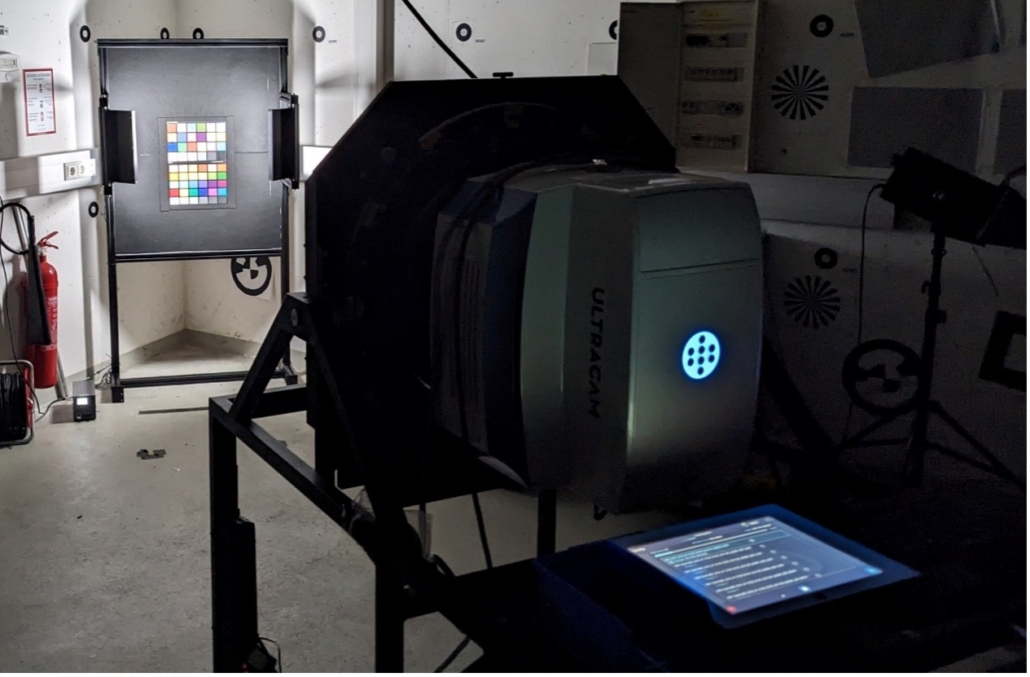
This process ensures that every UltraCam system sees color consistently, UltraCam Osprey for urban area prime collections and UltraCam Condor for our urban area refresh and wide area collections.
This is a critical differentiator. It means color consistency is maintained not just within a single camera, but across different camera types, varying lighting conditions (sun angle, atmospheric effects), and diverse mission scenarios.
With imagery captured across millions of square kilometers in varying regions, from Japan to Germany, Australia to South Africa, the level of consistency in color becomes foundational, not optional.
Understanding these basic principles of human color perception and camera spectral sensitivity is also a necessary foundation for implementing a radiometric processing workflow that consistently produces reliable data from continent to continent and from year to year. These stable reference materials and clearly defined standards for color calibration ensure our radiometry team at Vexcel can deliver the necessary consistent results.
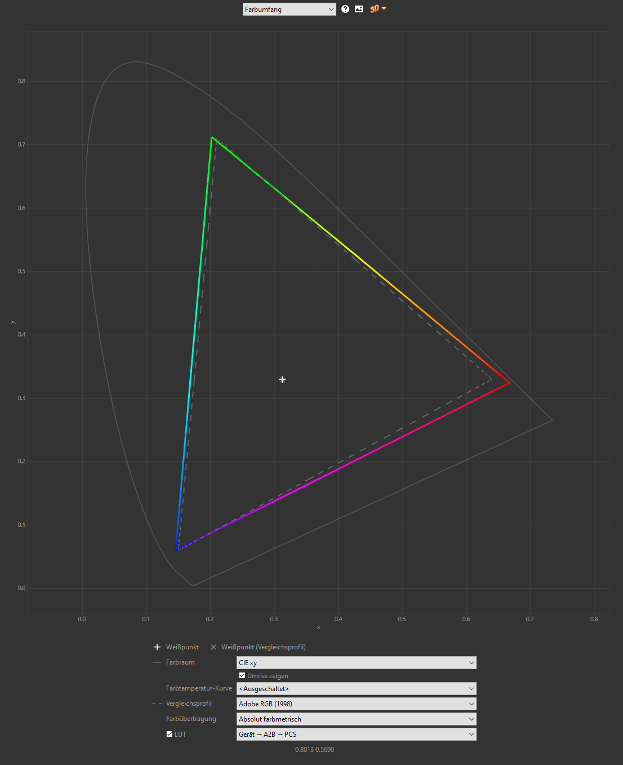
The working environment used for radiometric production also requires careful attention. Calibrated monitors that cover a broad range of widely used color spaces are essential.
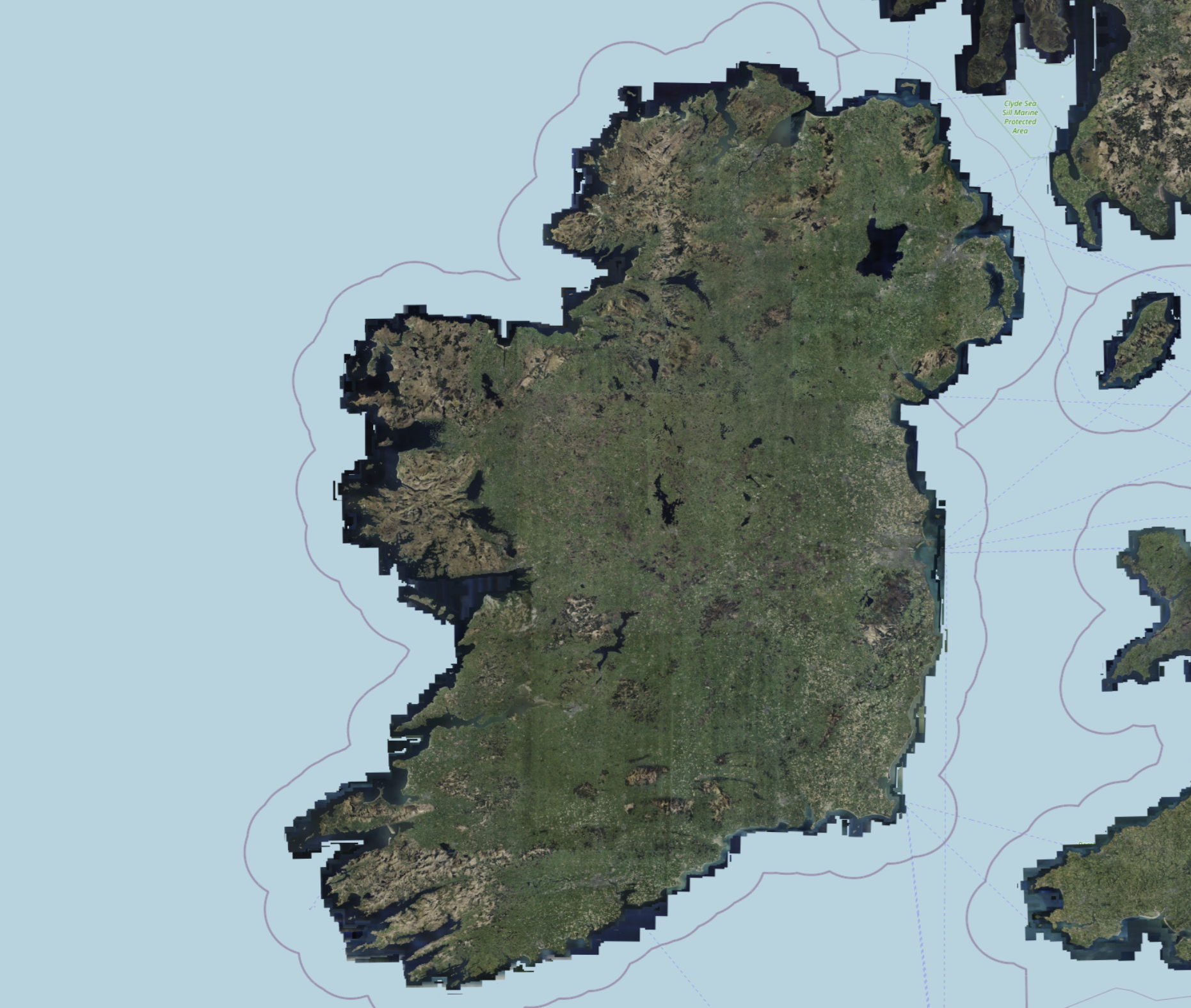
Ireland is a good example (see below) of the results of this philosophy. We apply the same radiometric production approach for both the wide area and the urban area imagery collections, to also ensure consistency between different products with different ground sample distances (GSDs). All the Irish data was flown in more or less the same season in the year which serves as a superb foundation for a near perfect result.
Unlike satellites that capture imagery under tightly controlled orbital conditions (sun synchronous), aerial imagery is collected across varying sun angles, environments, and atmospheric conditions. Vexcel’s UltraMap, our all-in-one photogrammetry post-processing software, ensures high quality color balancing and provides the necessary radiometric tools to produce seamless, consistent results across entire countries for the biggest aerial data program.
Why this matters more than ever
Our customers need data that’s consistent from city to city and country to country, especially when using AI and machine learning in their workflows. AI is only as strong as the data it learns from. Without consistency, AI introduces uncertainty. With consistency, AI delivers insight.
This is why Vexcel invests so heavily in radiometric calibration, production standards, and proprietary processing. It’s how the Vexcel Data Program delivers the most consistent aerial imagery at scale on the planet.
Because when color is right, everything built on top of it becomes more reliable. And that is what turns imagery into intelligence that fuels innovators, researchers, governments, industry, and beyond.