Driveways Don’t Lie: What Hardscapes Reveal About Risk & Value
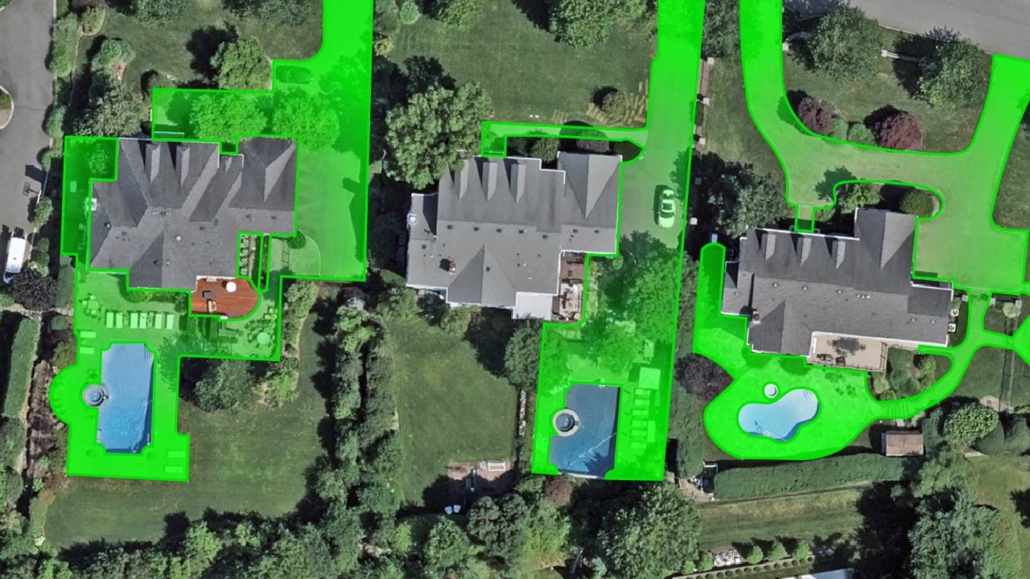
Some very important risk and value indicators on a property aren’t on the roofline, they’re on the ground. Driveways, patios, walkways, pool decks, retaining walls, and parking pads are hardscapes that influence how a property functions, how it manages water, and how it absorbs risk. Yet across industries, hardscape information is often missing or outdated and that gap can lead to blind spots.
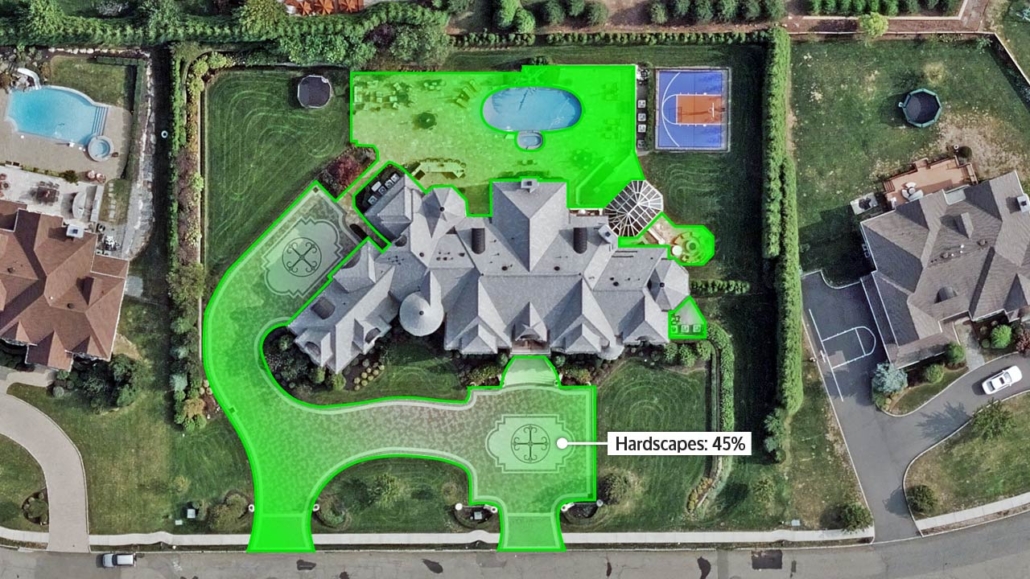
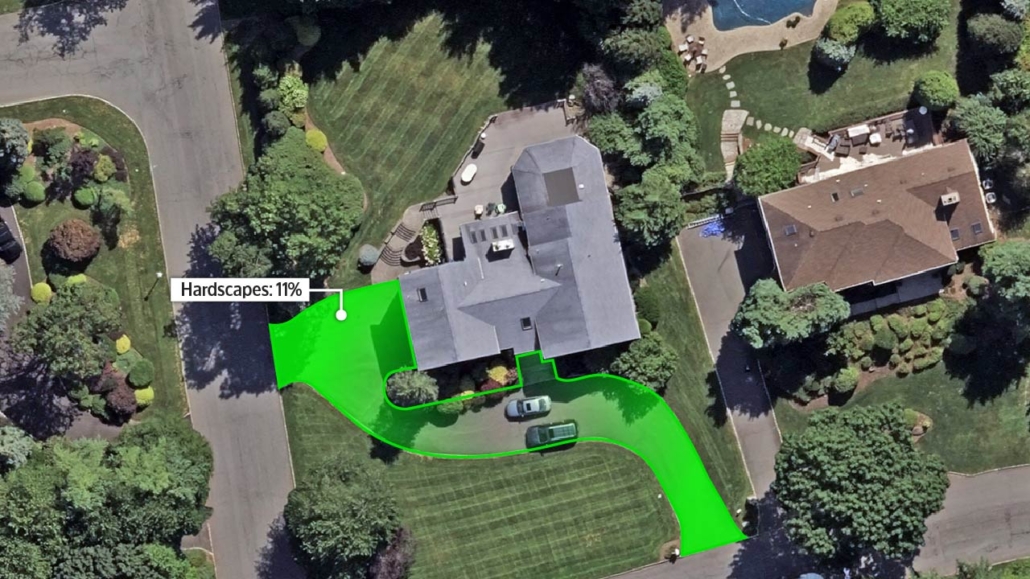
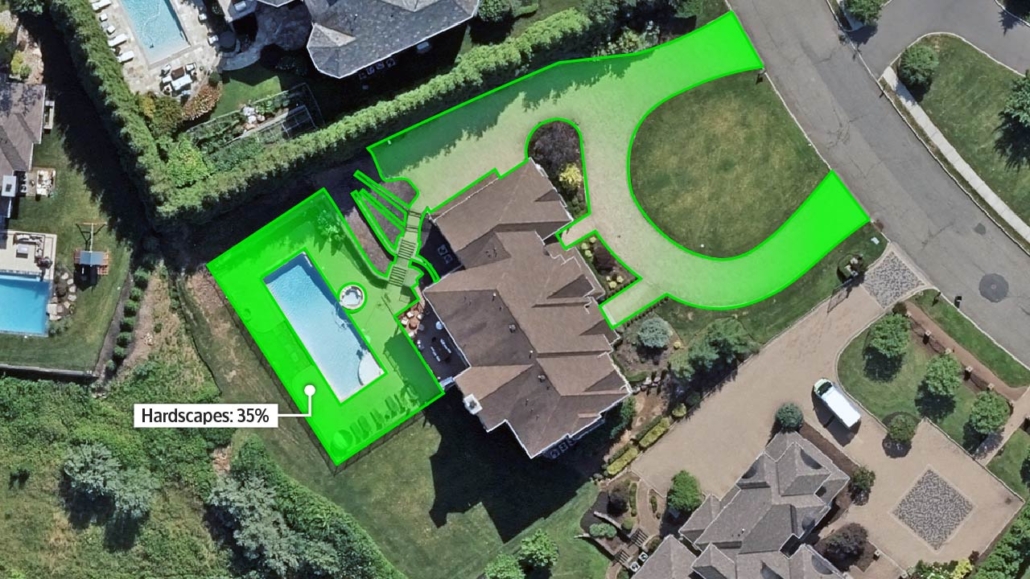
To illustrate why this layer of insight matters, we analyzed 10,326 residential properties in Livingston, New Jersey, using Elements AI to detect the percentage of each parcel covered by hardscape. What emerged is a clear picture of why ground-level details are essential for understanding real property conditions.
A Ground-Level Snapshot of Livingston, NJ
Elements AI scraped information off of our imagery set for all 10,000+ parcels, producing a distribution that highlights just how varied–and meaningful–these features are:
- 184 properties had 0% detectable hardscape
- 9,661 had 1-15% coverage
- 445 had 16-30% coverage
- 29 had 31-45% coverage
- 6 had 46-60% coverage
This dataset reveals a couple of important insights:
- Hardscapes vary widely, even in a single community. This one township contains properties with no visible hardscape and others where more than half the parcel is paved or built. That variation directly impacts risk, accessibility, valuation, and environmental behavior.
- Hardscapes are the norm, not the exception. More than 98% of Livingston properties contain detectable hardscape, reinforcing that these features matter for nearly every property-focused workflow.
When these details become visible and measurable, organizations gain a far more complete understanding of what’s happening on the ground.
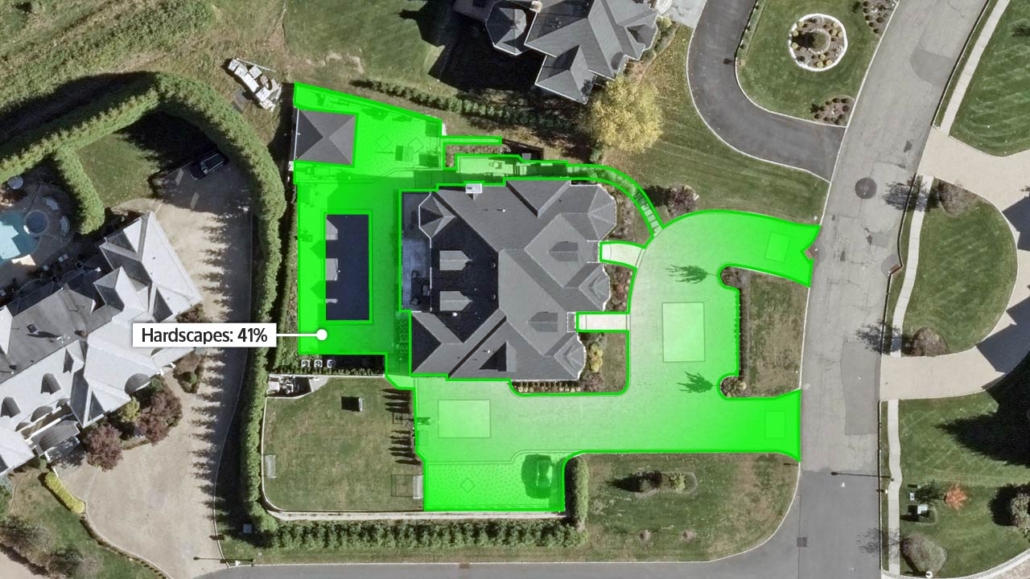
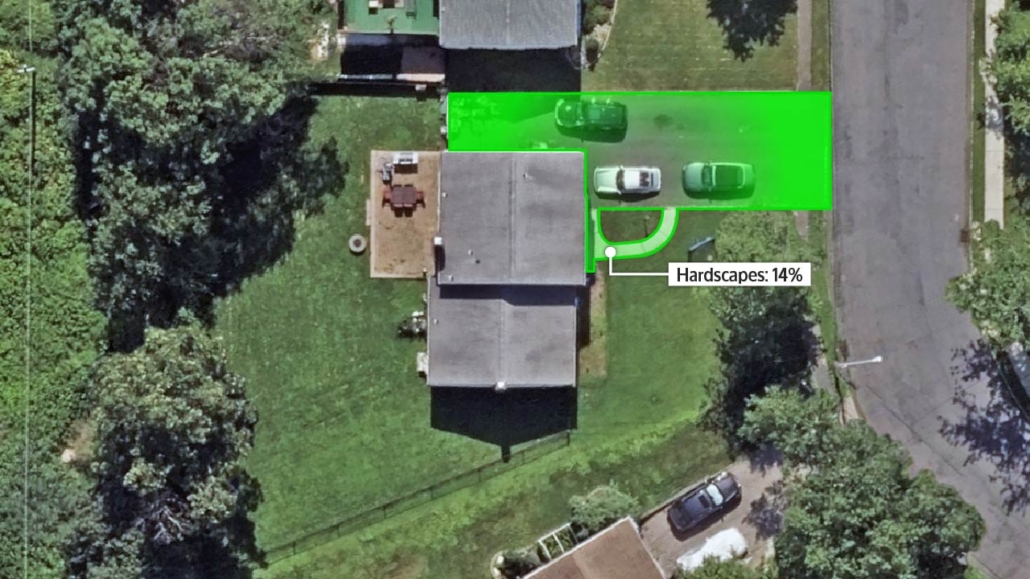
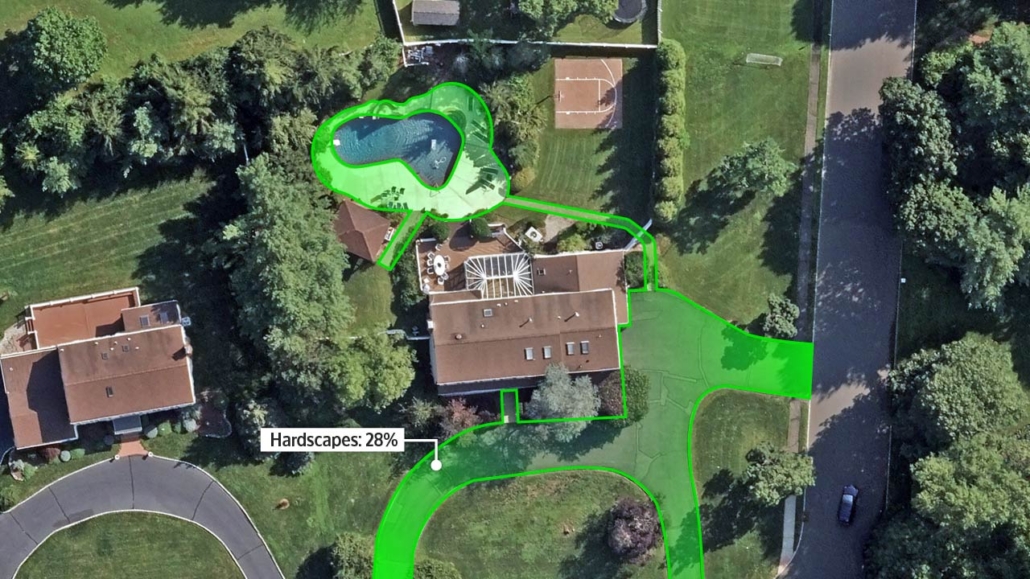
You might be asking, “Is the sport court considered a hardscape?” Actually, it’s a separate Elements AI attribute distinguished from regular hardscape material. This way, it doesn’t get mixed in with patios and other pavement features; you know it’s purpose and functionality.